⭐ Introduction
Most people believe better results come from more discipline.
More discipline to lose weight.
More discipline to save money.
More discipline to build a business.
More discipline to create a better life.
Whenever results disappoint, the usual advice is almost always the same:
Work harder.
Stay motivated.
Be consistent.
Try again.
And for a while, that advice seems reasonable.
But a simple question is rarely asked:
What if the visible problem is not the real problem?
What if the visible problem is only a symptom?
What if the real problem sits deeper, hidden inside a system that almost nobody questions?
Many intelligent, hardworking people spend years trying to improve outcomes while never examining the structure that creates those outcomes.
They blame themselves.
They blame their willpower.
They blame their lack of discipline.
Yet the hidden cause often remains untouched.
This guide explores a different possibility.
Not every problem is a discipline problem.
Sometimes it is a system problem.
A person struggling with weight may believe the problem is self-control.
A borrower may believe the problem is getting approved for a loan.
A saver may believe the problem is not saving enough money.
A consumer may believe the problem is choosing the right product.
Yet beneath these visible problems, another layer often exists.
A hidden layer.
A system.
And systems matter because systems create outcomes.
Most people focus on effort.
Systems focus on results.
Most people focus on intentions.
Systems focus on consequences.
Most people focus on what they hope will happen.
Systems focus on what can happen.
The difference may seem small.
Sometimes it changes everything.
The following examples come from completely different areas of life.
Health.
Money.
Risk.
Consumer decisions.
Everyday problem‑solving.
At first glance, they have nothing in common.
Yet each example reveals the same hidden pattern:
People often try harder within a flawed system instead of asking whether a better system already exists.
The goal of this guide is not to provide all the answers.
The goal is something more important.
To help you see questions that most people never think to ask.
Because once a hidden system becomes visible, the visible problem often starts to look very different.
And that is where real clarity begins.
⭐ Example 1 — The Hunger Illusion
Millions of people struggle with excess weight.
The usual explanation is simple:
People lack discipline.
They should eat less.
Move more.
Ignore cravings.
Fight hunger.
Try harder.
And when the results disappoint, they often blame themselves.
Yet a different question exists.
For most of human history, obesity was rare.
Type 2 diabetes was rare.
People were not carrying snacks everywhere.
People were not counting calories with smartphone apps.
People were not constantly searching for the next diet.
Yet widespread obesity was largely absent.
Why?
Human biology did not suddenly change.
Human beings did not become weaker.
Human beings did not suddenly lose discipline.
Something else changed.
The food system changed.
Highly processed foods became normal.
Constant eating became normal.
Sugar became normal.
Artificially engineered foods became normal.
The result was predictable.
More people became hungry more often.
More people ate more frequently.
More people struggled to stop.
And when weight increased, the blame was often directed toward the individual rather than the system itself.
Most people ask:
How can I eat less?
A different question may be more important:
Why am I hungry in the first place?
The answer is rarely as simple as discipline.
Hunger is one of the most powerful biological forces in human life.
Fighting it every day is difficult.
Building a system that reduces it is very different.
That difference matters.
A lot.
Many people spend years fighting hunger.
Few spend years questioning why the hunger exists.
Many people focus on controlling themselves.
Far fewer focus on understanding the system around them.
And that is often where the biggest difference appears.
HUMAN BIOLOGY DIDN’T SUDDENLY CHANGE.
THE FOOD SYSTEM DID.
And that is often the moment another hidden assumption becomes visible.
⭐ Example 2 — The Risk Illusion
Most people believe a loan is an opportunity.
A house.
A business.
A project.
A better future.
And in many cases, it is.
But there is something most borrowers never realize.
The financial system is not looking at the same future they are.
A future homeowner imagines a home.
An entrepreneur imagines a successful company.
The borrower imagines growth.
The financial system imagines failure.
Before a borrower even signs the first document, the system is already asking a completely different question:
What happens if everything goes wrong?
This difference creates one of the largest blind spots in personal finance.
Most people spend their time calculating success.
The system spends its time calculating failure.
One side sees opportunity.
The other side sees risk.
One side imagines what can be gained.
The other side calculates what can be lost.
That difference matters.
A lot.
Because many of the protections built into lending systems were never designed for success.
They were designed for failure.
That is why guarantees exist.
That is why collateral exists.
That is why recovery calculations exist.
That is why lenders spend so much time evaluating downside scenarios.
Most borrowers rarely think about these things.
The system thinks about them before the first signature is placed.
THE QUESTION MOST PEOPLE NEVER ASK
What is this still worth if everything goes wrong?
What remains after liquidation?
What remains after a forced sale?
What can still be recovered?
Most people never ask these questions.
The system asks them before the contract even exists.
A borrower often thinks about ownership.
The system thinks about recovery.
A borrower sees a future asset.
The system calculates a future loss.
The borrower studies success.
The system studies failure.
THE DETAIL MANY PEOPLE DISCOVER TOO LATE
Most borrowers focus on what a project will be worth if everything succeeds.
The system focuses on what remains if everything fails.
That difference is easy to ignore.
Until reality arrives.
A project can disappear.
A business can disappear.
A house can lose value.
An asset can disappear.
The opportunity can disappear.
The optimism can disappear.
THE PROJECT CAN DISAPPEAR.
THE BUSINESS CAN DISAPPEAR.
THE HOUSE CAN LOSE VALUE.
THE ASSET CAN DISAPPEAR.
THE DEBT CAN STILL REMAIN.
And that is often the moment REGRET BEGINS.
Many people spend years imagining success.
The financial system spends years preparing for failure.
Many only discover the difference when it is already TOO LATE.
The system understood failure before the borrower understood the system.
That is why the lesson is bigger than loans.
It applies to almost every important decision in life.
People naturally focus on what they hope will happen.
Systems focus on what can happen.
PEOPLE FOCUS ON SUCCESS.
SYSTEMS PREPARE FOR FAILURE.
Understanding that difference before making a commitment may be one of the most valuable forms of financial clarity a person can acquire.
⭐ Example 3 — The Saving Illusion
Most people believe wealth comes from saving money.
And saving is important.
But saving and building wealth are not the same thing.
Many people spend decades doing exactly what they were taught.
Save money.
Work hard.
Avoid unnecessary spending.
Stay disciplined.
Be responsible.
And after twenty years, many discover something uncomfortable:
They were disciplined.
They saved consistently.
Yet real wealth never appeared.
Why?
Because discipline alone was never the entire system.
Imagine two people.
Both save the same amount every month.
Both make sacrifices.
Both remain patient.
Both continue for twenty years.
Yet one reaches financial freedom far sooner than the other.
At first glance, this makes little sense.
Both worked.
Both saved.
Both were disciplined.
So what happened?
One person simply stores money.
The other uses a system that allows growth to generate additional growth.
The first sees money accumulate.
The second sees growth accumulate.
At first, the difference appears small.
Then it begins to accelerate.
A few dollars become hundreds.
Hundreds become thousands.
And eventually the gap becomes large enough to change an entire future.
Most people understand saving.
Far fewer understand what happens when growth itself begins producing additional growth.
That is why the biggest surprises often arrive many years later.
Not because people failed.
But because they never examined the system.
Many spend twenty years improving discipline.
Few spend twenty years questioning the structure behind the results.
The question may not be:
How can I save more?
The better question may be:
What system is working on my behalf while I sleep?
Many people focus on the amount they save.
Far fewer focus on what their money is actually doing.
And that difference matters.
A lot.
TWO PEOPLE CAN SAVE THE SAME AMOUNT.
YET ONE ENDS UP WITH FAR MORE WEALTH THAN THE OTHER.
THE DIFFERENCE IS NOT EFFORT.
THE DIFFERENCE IS THE SYSTEM.
And that is often the moment another hidden assumption becomes visible.
⭐ Example 4 — The Cargo Bike Illusion
Most people assume that a more expensive system must be a better system.
Bigger.
Heavier.
More sophisticated.
More expensive.
The cargo bike became one of the clearest examples of this assumption.
Families were told they needed a dedicated cargo vehicle.
A special transport solution.
A larger frame.
A larger battery.
A larger investment.
The message was simple:
More bicycle.
More convenience.
More freedom.
But a simple question remained largely unexplored.
What problem is the cargo bike actually solving?
For many households, the answer is surprisingly ordinary.
Transporting groceries.
Running local errands.
Occasional shopping.
Carrying moderate loads.
Nothing more.
The hidden assumption is that these tasks require an entirely different bicycle.
In many cases, they do not.
A standard electric bicycle equipped with a rear‑wheel motor and a detachable cargo trailer often performs the same practical task for a fraction of the cost.
A SIMPLE COMPARISON
Rational System
Electric bicycle with rear‑wheel motor:
≈ $850 – $1,050
Cargo trailer:
≈ $150 – $300
Combined cost:
≈ $1,000 – $1,200
Cargo Bike System
Two‑wheel cargo bike:
≈ $3,200 – $7,500
The difference is not small.
The cargo bike often costs:
THREE TO SEVEN TIMES MORE.
Yet both systems can transport groceries.
Both systems can transport daily cargo.
Both systems can replace many short car journeys.
Both systems solve the same basic problem.
THE QUESTION THAT CHANGES EVERYTHING
Most people compare products.
The more useful comparison is often between systems.
The question is no longer:
Which bicycle should I buy?
The question becomes:
Why am I paying several thousand dollars more?
That is where the illusion begins to crack.
Many people assume they are purchasing convenience.
In reality, they may be purchasing complexity.
The trailer can be detached.
The bicycle remains usable.
The system remains flexible.
The cargo bike remains large even when no cargo is being transported.
The trailer disappears when it is no longer needed.
The cargo bike does not.
One system adapts.
The other remains permanently oversized.
THE HIDDEN COST
People often focus on the purchase.
Far fewer focus on the system behind the purchase.
Higher purchase price.
Higher insurance costs.
Higher replacement costs.
Higher theft costs.
Higher maintenance costs.
The visible difference is the bicycle.
The hidden difference is everything that follows.
Most people see transport.
The system sees total ownership cost.
Most people see a product.
The system sees a long‑term commitment.
PEOPLE OFTEN COMPARE PRODUCTS.
THEY RARELY COMPARE SYSTEMS.
THE REAL QUESTION IS NOT WHICH BICYCLE COSTS MORE.
THE REAL QUESTION IS WHY SO MANY PEOPLE PAY THREE TO SEVEN TIMES MORE FOR THE SAME OUTCOME.
And that is often the moment another hidden assumption becomes visible.
⭐ Example 5 — The Rain Illusion
Most people believe rain is the problem.
Rain begins.
Visibility decreases.
Glasses become wet.
Cold air reaches the face.
Comfort drops.
The usual conclusion is simple:
Rain makes cycling difficult.
And because rain is treated as the problem, people often search for the wrong solution.
More clothing.
More equipment.
More accessories.
Sometimes even a car.
But what if rain is not the real problem?
What if the real problem is an incomplete system?
For years, a practical rain system already existed.
- An integrated rain cap that did hinder sideways visibility and natural head movement.
- A summer cap that partially functioned as a rain screen for the eyes or glasses.
- A waterproof rain jacket.
- Additional neck protection during cold weather.
The system worked.
Cycling remained possible.
Shopping remained possible.
Daily transportation remained possible.
The comfort level was acceptable.
Approximately:
6 / 10
Many people would stop there.
They would simply accept the remaining discomfort.
Others would conclude that bad weather makes a car necessary.
Not because a car is actually required.
But because one weak part of the system remains unsolved.
The real weakness was not transport.
The real weakness was visibility and comfort during prolonged rain.
Rain still reached parts of the face.
Cold wind still reached exposed skin.
The integrated rain cap restricted movement.
Visibility remained imperfect.
The system functioned.
The system was simply incomplete.
THE QUESTION THAT CHANGED EVERYTHING
Instead of asking:
How can I tolerate bad weather?
A different question appeared:
Which part of the system is still creating the problem?
That question led to a completely different solution.
Not a new bicycle.
Not a car.
Not a $400 racing helmet.
A better system.
THE RAIN CLARITY SYSTEM
The starting point was a simple waterproof fisherman-style hat.
The original brim, normally around 3 inches (7.5 cm) long, was extended to approximately 4.7 inches (12 cm).
- Better sun protection.
- Better rain protection.
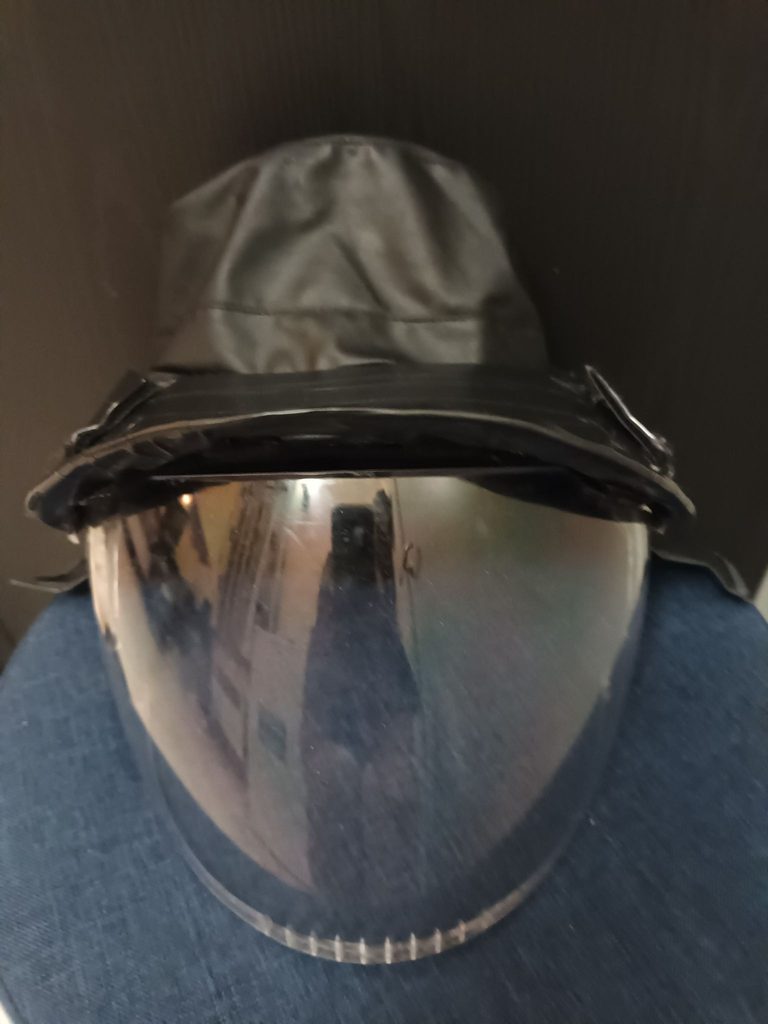
A transparent face shield was integrated behind the extended brim.
A narrow 5 mm ventilation gap separates the extended brim from the face shield.
This arrangement creates a passive ventilation system.
The extended brim shields the ventilation gap from direct rainfall while maintaining continuous airflow.
The face shield protects far more than the eyes.
It protects the nose.
It protects the cheeks.
It protects the chin.
It reduces exposure to rain.
It reduces exposure to cold wind.
It improves long-term comfort.
Unlike many commercial cycling visors that mainly protect the eyes, the face shield extends protection across much of the face.
The goal was never to create a new helmet.
The goal was to remove the final excuse for needing a car during bad weather.
The system remained compatible with a standard bicycle helmet.
No electronics.
No batteries.
No motors.
No moving parts.
No expensive proprietary equipment.
Just a better solution to the actual problem.
THE RESULT
The weather did not change.
The roads did not change.
The distance did not change.
The cyclist did not become stronger.
The cyclist did not become more disciplined.
The system changed.
And the experience changed with it.
Comfort increased from:
6 / 10
to
9.5 / 10
That difference matters.
Because once the final weak point disappears, another hidden truth becomes visible.
The obstacle was never the rain itself.
The obstacle was the weakness inside the system.
Many people try to tolerate a problem.
Far fewer ask whether the system itself can be improved.
That question changes everything.
THE WEATHER DID NOT CHANGE.
THE CYCLIST DID NOT CHANGE.
THE SYSTEM CHANGED.
AND THE PROBLEM ALMOST DISAPPEARED.
And that is often the moment another hidden assumption becomes visible.
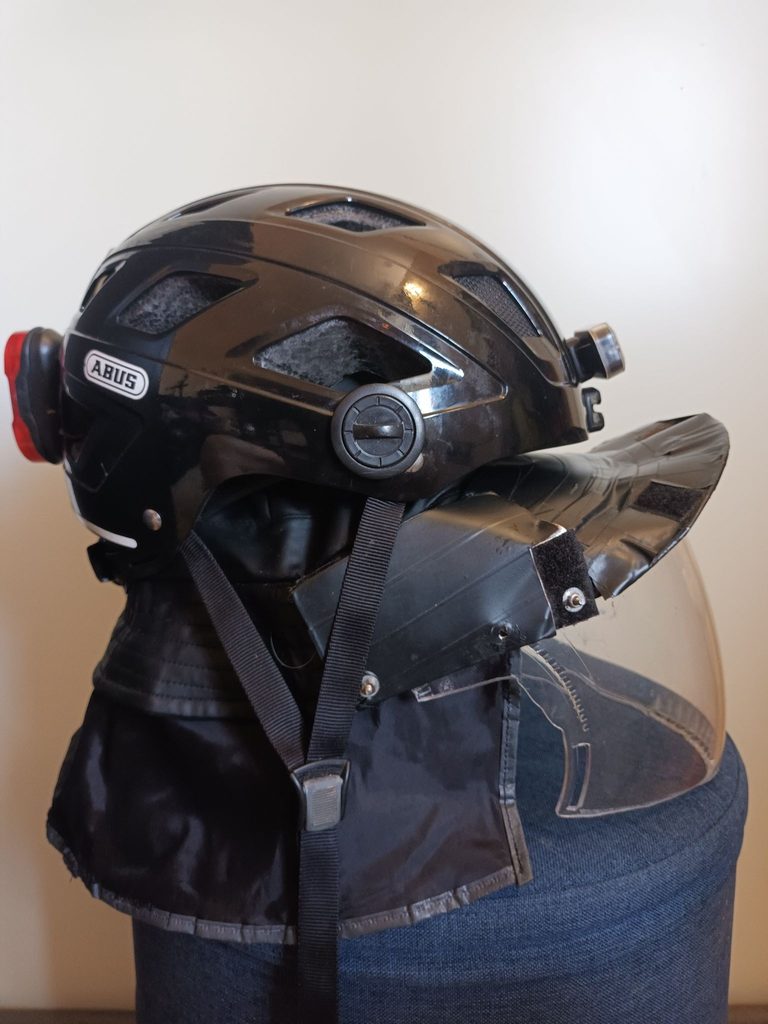
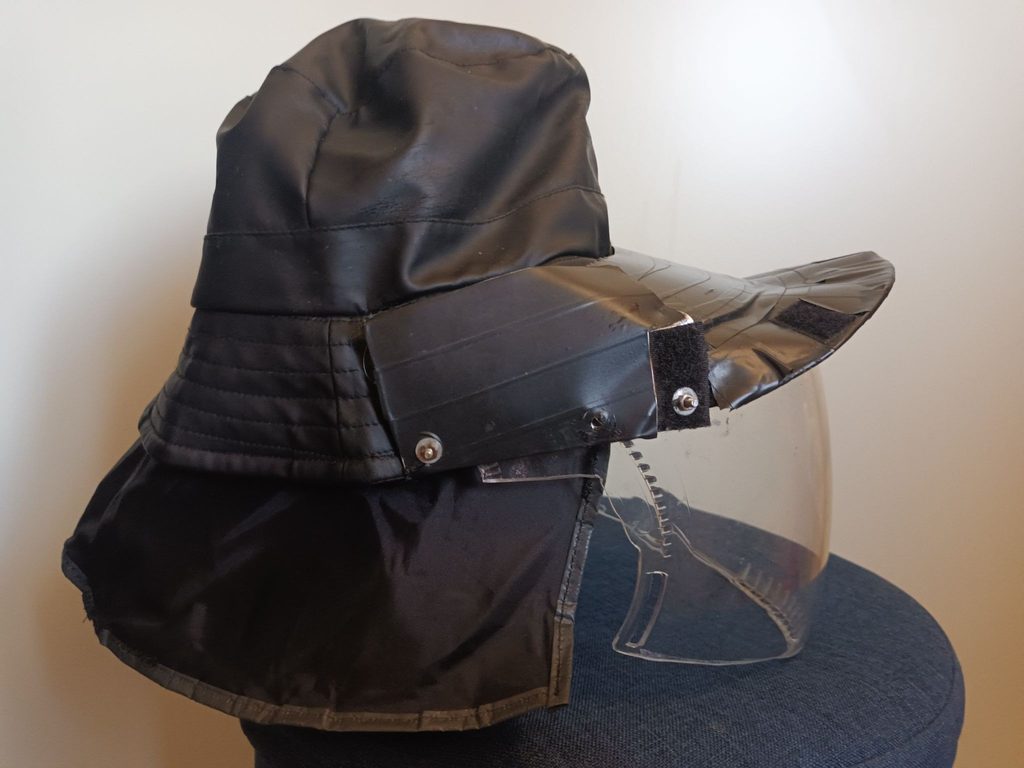
Bike Helmet and Bike Hat with Ventilation Slit
Example 6 — The Winter Boot Illusion
Most people believe cold feet are a simple problem.
The solution appears obvious.
Buy warmer boots.
Buy thicker socks.
Buy larger boots.
And if cold feet remain, buy even more insulation.
The logic seems reasonable.
Yet many people unknowingly repeat this cycle for years.
Winter boots are purchased.
Thermal socks are purchased.
Larger sizes are purchased.
Cold feet often remain.
Why?
Because most people are buying products.
Very few are being taught how the system actually works.
A person may visit a store specifically looking for protection against freezing weather.
Labels are checked.
Product descriptions are read.
Temperature claims are compared.
The purchase appears rational.
The buyer leaves believing the problem has been solved.
Yet the disappointment often arrives later.
Not because the buyer made no effort.
Not because the buyer was careless.
But because the system was never explained.
Most consumers never realize that winter footwear is not designed for a single environment.
Some products are designed for cool winter weather.
Some are designed mainly for comfort.
Some are intended for occasional exposure to cold temperatures.
Others are designed around insulation systems originally developed for winter sports and prolonged exposure to freezing conditions.
To the average buyer, both products may simply appear to be:
“Warm winter boots.”
Yet the systems behind them can be fundamentally different.
That difference is easy to miss.
Especially when both products are sold in the same category.
Many consumers never learn this distinction.
As a result, they often purchase multiple products while unknowingly staying inside the same system.
The boot changes.
The outcome often does not.
A thicker sock is added.
A larger boot is purchased.
More material is added.
Yet the original problem remains.
Why?
Because warmth is not created only by adding more material.
Modern winter systems often rely on different principles.
Insulation.
Moisture management.
Air retention.
Circulation.
Proper fit.
The visible solution is often thickness.
The hidden solution is understanding heat loss.
Most people ask:
How can I make my feet warmer?
A different question may be more important:
What winter system was this product actually designed for?
That is often the question nobody asks.
Not because it is unimportant.
But because nobody explains that different winter systems exist in the first place.
The result is predictable.
People spend years improving products.
Few spend years understanding the system behind those products.
And that difference matters.
A lot.
THE BOOTS WERE LABELLED WARM.
THE FEET REMAINED COLD.
THE PRODUCTS ALREADY EXISTED.
THE SYSTEM WAS NEVER EXPLAINED.
Many people assume better results come from buying a different product.
Sometimes the bigger improvement comes from finally understanding the system behind the product.
And that is often the moment another hidden assumption becomes visible.
⭐ The Common Pattern
At first glance, these examples seem unrelated.
Weight loss.
Loans.
Money.
Cycling.
Even bad weather.
Yet the pattern keeps repeating.
People focus on effort.
The real answer often sits inside a system.
The visible problem attracts attention.
The hidden mechanism creates the outcome.
Once the mechanism becomes visible, many problems suddenly become easier to understand.
The examples in this guide have one thing in common.
In every case, people focused on the visible problem.
The outcome was often determined by the hidden system behind it.
The hunger remained because the food system changed.
The debt remained because the risk system had already calculated failure.
The wealth never appeared because the growth system was missing.
The expensive solution disappointed because people bought a story instead of a system.
The rain remained a problem because the system remained incomplete.
People often try harder within a flawed system instead of asking whether a better system already exists.
The pattern rarely announces itself.
It hides behind assumptions.
It hides behind traditions.
It hides behind marketing.
It hides behind habits.
It hides behind common sense.
And because it remains hidden, people keep solving the wrong problem.
They focus on symptoms.
The system determines outcomes.
When the system changes, the outcome changes.
A better food system changes hunger.
A better financial system changes outcomes.
A better transport system changes costs.
A better weather system changes comfort.
The examples are different.
The mechanism is the same.
People often assume that the system they know is the only realistic option.
They grow familiar with it.
They adapt to it.
They defend it.
And over time, they stop questioning it.
Many people assume that the system they currently use is already the best available system.
Because it appears familiar, they rarely compare it against alternatives.
Because it feels familiar, they stop searching.
Because it feels familiar, they stop questioning.
Because it feels familiar, they stop questioning alternatives.
They stop looking for better approaches.
The hidden danger is not always using a poor system.
The hidden danger is assuming a better system does not exist.
Sometimes a better system has existed for years.
Sometimes for decades.
Sometimes people simply never learned that it was there.
They compare the options they can see.
People often believe they are making a well-informed decision because they carefully compare the available options.
Yet comparing three products inside the same system is very different from comparing the system itself.
Sometimes the greatest improvement comes not from choosing a better option within the system.
Sometimes it comes from discovering a different system entirely.
A simple example:
Imagine someone comparing three winter boots.
Boot A.
Boot B.
Boot C.
The comparison appears logical.
Prices are compared.
Features are compared.
Reviews are compared.
Yet all three products may belong to the same winter system.
The buyer believes every relevant option has been examined.
In reality, an entirely different winter system may exist outside the comparison.
The buyer carefully compared A, B and C.
The buyer never compared system Z.
The problem was not a lack of research.
The problem was that the most relevant alternative never entered the comparison.
PEOPLE RARELY COMPARE SYSTEMS THEY DO NOT KNOW EXIST.
PEOPLE SOMETIMES DISMISS SYSTEMS THEY NEVER SERIOUSLY EXAMINED.
The problem is not always that a better system is hidden.
SOMETIMES THE PROBLEM IS NOT THAT A BETTER SYSTEM DOESN’T EXIST.
THE PROBLEM IS THAT YOU NEVER LEARNED TO LOOK FOR IT.
Many continue using a system because it is familiar.
Not because it produces the best outcome.
The food systems that existed before widespread processed food already existed.
The principles of compounding have existed for centuries.
Different approaches to risk have existed for generations.
Simple transport systems existed long before expensive alternatives appeared.
The solutions were not necessarily new.
People simply never compared them.
That is why one question matters more than most people realize:
What other system already exists that I have never seriously examined?
Sometimes the greatest improvement comes not from creating something new.
Sometimes it comes from discovering something old that already works better.
Many people spend years inside a familiar system without ever seriously comparing it to alternatives.
Not because they are unwilling.
Not because they lack intelligence.
But because nobody taught them where to look.
Most people learn facts.
Few people learn how to compare systems.
That is why many remain inside systems that produce mediocre outcomes while better alternatives have existed for years, sometimes decades, sometimes even generations.
The problem is often not that a better system is hidden.
The problem is that people never learned to examine the system they already use.
They never learned to ask:
Why does this work the way it does?
What alternatives already exist?
What results do those alternatives produce?
Many of the most valuable systems are not new.
They are simply overlooked.
The principles behind healthier eating existed long before modern food industries.
The principles behind compounding existed long before modern investing platforms.
The principles behind risk management existed long before modern lending.
The principles behind efficient transport existed long before expensive alternatives appeared.
The systems were already there.
Most people simply never learned to compare them.
And that may be one of the most important lessons of all.
Many people spend years learning facts.
Few spend years learning how to compare systems.
Schools teach many valuable subjects.
But many of the systems that shape everyday life are often discovered much later:
- Money
- Risk
- Food
- Behavior
- Decision‑making
Most people do not make poor decisions because they are unintelligent.
They make poor decisions because nobody taught them which questions to ask.
And when the wrong questions are asked, even intelligent people can spend years inside a system that produces disappointing outcomes.
Sometimes the problem is not a lack of effort.
Sometimes the problem is not knowing that another system already exists.
Many people spend decades learning how the system works.
Unfortunately, the lessons often arrive after the consequences.
Real clarity comes from understanding a system before it teaches you through experience.
As one old businessman once summarized it:
“By the time you understand the whole system, you are already old and worn out.”
There is wisdom in that observation.
Most people only understand a system after they have spent years living inside it.
After the debts.
After the missed opportunities.
After the expensive mistakes.
After the consequences.
The purpose of clarity is to shorten that process.
The goal is not to know everything.
The goal is to recognize better systems before decades pass.
Many expensive mistakes begin long before the mistake itself.
They begin when important questions are never asked.
Yet there is one additional mistake that quietly affects many important decisions.
Once an answer appears, people often stop thinking.
They stop questioning.
They stop comparing.
They stop searching for alternative systems.
The decision feels complete.
The system has never been examined.
Before making an important commitment, it is often worth pausing longer than most people think.
Not to collect more opinions.
Not to delay forever.
But to make sure the correct question has been asked.
A decision that seems obvious today may look very different after a deeper examination of the system behind it.
Sometimes one extra day changes nothing.
Sometimes it changes everything.
Before you make an important decision or evaluate an opportunity, ask yourself two questions:
WHAT OTHER SYSTEM ALREADY EXISTS THAT I HAVE NEVER SERIOUSLY EXAMINED?
WHAT’S THE OTHER SIDE OF THE BALANCE SHEET THAT I HAVEN’T SEEN YET?
Most people focus on the visible opportunity.
Wise people also look for invisible alternatives and invisible consequences.
Real clarity comes from understanding a system before it teaches you through experience.
Most people only discover important questions after the consequences arrive.
The purpose of wisdom is not to know more answers.
The purpose of wisdom is to ask better questions before the consequences arrive.
The goal is not to know everything.
The goal is to start asking today the questions that experience would otherwise teach you twenty years from now.
OLD AND WISE IS GOOD.
YOUNG AND WISE IS BETTER.
SOMETIMES THE PROBLEM IS NOT THAT A BETTER SYSTEM DOESN’T EXIST.
THE PROBLEM IS THAT YOU NEVER LEARNED TO LOOK FOR IT.
⭐ Final Insight
Most people spend years trying harder.
Few spend time questioning the system itself.
Yet a better system can outperform years of additional effort.
A better system can remove problems that discipline alone never solves.
The goal of clarity is not to work harder.
The goal of clarity is to see what has been hidden in plain sight.
You do not always know what you are missing until you discover it.
Sometimes the biggest improvement comes not from working harder, but from seeing something that was always there.
The food system changed.
The risk system calculated failure.
The growth system created different outcomes.
The transport system rewarded simplicity over appearance.
The weather system removed a problem that many simply accepted.
Five different examples.
One recurring lesson.
THE VISIBLE PROBLEM WAS RARELY THE REAL PROBLEM.
THE SYSTEM WAS.
Once you discover one hidden system, it becomes difficult not to see others.
And that is often where clarity begins.
The examples in this guide are only a small selection of the hidden systems that influence health, money, behavior, business, decision‑making, and everyday life.
How many hidden systems remain invisible simply because nobody taught you where to look?
That question eventually led to the creation of the Clear Method Works Complete Collection.
Because once you discover one hidden system, a new question appears:
WHAT ELSE AM I MISSING?
⭐ Continue Exploring
➤ Clear Method Works Complete Collection
One collection. No missing pieces. More knowledge. Fewer blind spots. Better decisions.
Clear Method Works
Helping people discover better systems and make better decisions.
Purchase Policy
All sales are final. Because digital products are delivered instantly and cannot be returned, refunds are generally not available. If you are charged more than once for the same purchase, please contact us and duplicate payments can be reviewed manually.
Copyright
Copyright © 2026 Clear Method Works. All rights reserved.
This publication may not be reproduced, distributed, stored, or transmitted in any form without prior written permission from Clear Method Works, except for brief quotations used in reviews or educational commentary.
Disclaimer
The information in this guide is provided for educational and informational purposes only.
The examples presented are intended to illustrate how different systems can influence outcomes in areas such as health, finance, risk assessment, decision‑making, transportation, and everyday life.
Nothing in this guide should be considered medical, financial, legal, tax, or investment advice. Readers should perform their own research and seek professional guidance where appropriate.
Clear Method Works makes no guarantee regarding any specific outcome resulting from the application of ideas discussed in this publication.